
Models Are Commoditized. Context Isn't.
Keep the current state of your business continuously available to apps, analytics, and agents.
Native Kafka & Pulsar
No rewrites: the protocol is just an interface.
Same Ground as Your Lakehouse
Streams and tables share one open infrastructure.
Production-Native Context
Fresh, governed context for apps and agents.
Trusted for mission-critical data and AI
Streamhouse:
Data to Run the Business
A shared data architecture for the age of AI, on the same open infrastructure as your lakehouse.

• OVERVIEW
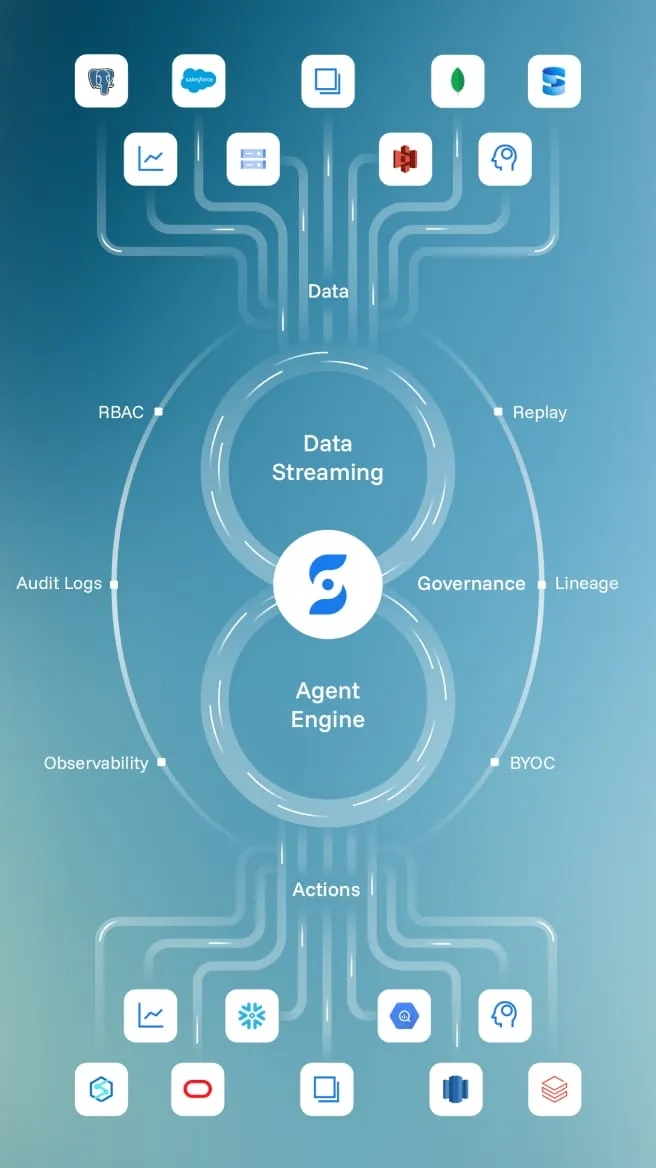
From Every Source to Every Application and Agent
One shared data architecture that captures, transports, transforms, governs, and serves the current state of your business — so applications, analytics, and agents can act on it.
StreamNative is Recognized in The Forrester Wave™: Streaming Data Platforms, Q4 2025
GET THE REPORT
• WHAT'S BLOCKING ENTERPRISES
The Model Isn't the Hard Part. The Context Is.
Applications and agents need business context that is fresh, governed, and reliable enough for production — all at the same time. Teams reach for one of two answers, and neither was designed to deliver all three.
Source Systems Weren't Built for Agents
Pointing agents at source systems runs into missing interfaces, access that is limited for good security and performance reasons, and internal schemas that are hard to read.
Lakehouses Were Built for Analysis
The lakehouse is a good, safe answer, but it was built for batch arrival, internal service levels, and analytical queries — not for running the business as it happens.
Fresh, Governed, and Reliable at Once
Each is solved somewhere on its own. Applications and agents that act on events need all three together, continuously, at production service levels.
The Result
What's needed is a shared data architecture that captures, transports, transforms, governs, and serves the current state of the business, continuously.
• HOW STREAMNATIVE HELPS
A Shared Data Architecture for the Age of AI
The StreamNative Data Platform keeps the current state of your business continuously available to applications, analytics, and agents: real-time, production-native, and decentralized, on the same open infrastructure as your lakehouse.
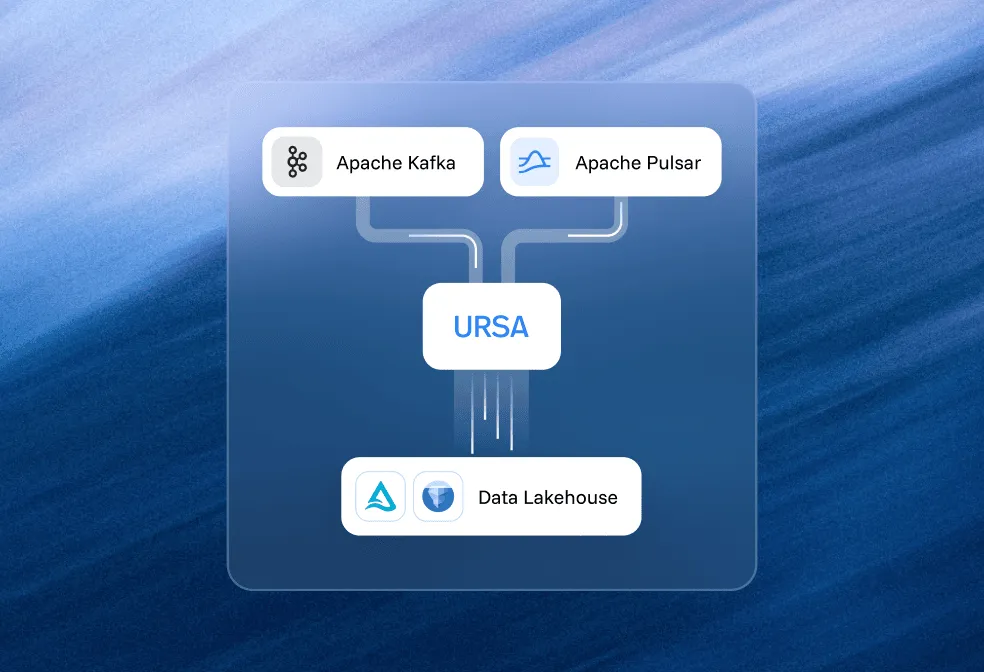

Same Open Infrastructure as Your Lakehouse
Kafka and Pulsar run on Lakestream, the open stream storage implemented by Ursa, so streams sit next to your Iceberg and Delta tables on object storage, without a separate stream-to-table pipeline.

Act on Events as They Happen
Applications and agents subscribe to live streams and act in milliseconds, instead of waiting for the next batch window to refresh their context.

Put Governance Underneath
Policy that lives in the foundation follows the data to every consumer. Access scopes, audit, and lineage apply to every read and action instead of being bolted on at the edges.
• WHO WE WORK WITH
Built for Teams that Own Real-time Data and AI
StreamNative is built for teams at the intersection of real-time systems, data, and AI initiatives.
Platform & Infrastructure Teams
Modernize Kafka and Pulsar without rewrites, consolidate clusters, cut cost, and choose your deployment model.
Data & Analytics Teams
Stream into Iceberg/Delta and serve BI, ML, and applications from the same governed, continuously current tables.
AI & Application Teams
Give apps and agents fresh, governed business context with clear policies and full audit.
How Teams Use StreamNative
Three concrete ways teams put real-time business context to work today.
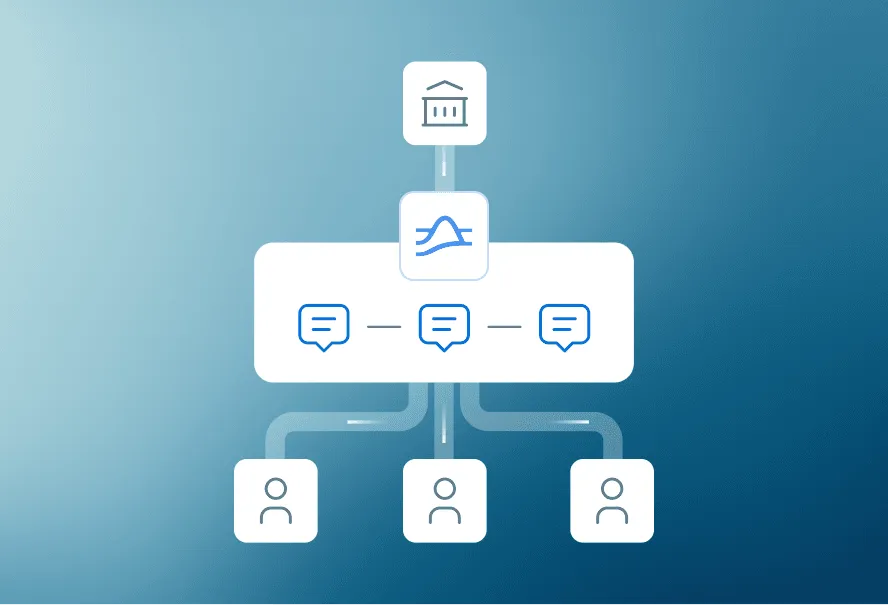
Production-Proven Message Queue
Run mission-critical messaging on a Pulsar-based queue with multi-tenancy, geo-replication, and low-latency delivery at global scale.
Best for: Platform, infrastructure, and application teams
Outcome: A reliable "nervous system" for your applications
Lakehouse-Native Kafka Replacement
Keep your Kafka APIs while switching to Ursa — a lakehouse-native engine that cuts cluster sprawl, streams into Iceberg/Delta, and reduces TCO dramatically.
Best for: Platform and data teams
Outcome: One governed streaming backbone for both real-time and analytical use cases
Event-Driven Agent Engine
Deploy event-driven agents that observe streams, reason over live context, and act in real time — constrained by policies, RBAC, and full audit.
Best for: AI and application teams
Outcome: Agents that can safely operate on production data and tools
• SUCCESS STORIES
Trusted for Mission-Critical Data and AI
Organizations across industries use StreamNative as their foundation for real-time data, applications, and AI — running everything from payment flows and customer engagement to security analytics and operational intelligence.